
















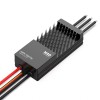
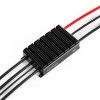
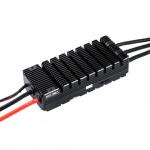
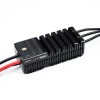
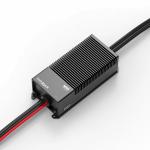


Drone ESCs for Commercial, Industrial, FPV and Heavy-Lift UAVs
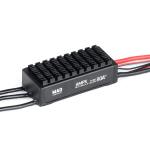
MAD Components manufactures and supplies drone ESCs and UAV electronic speed controllers for FPV drones, commercial multirotor aircraft, industrial UAVs, agriculture drones, heavy-lift platforms, manned aircraft projects and delivery drone applications. ESCs control how power is delivered from the battery to the motor, making them a critical part of motor response, efficiency, reliability and flight performance.
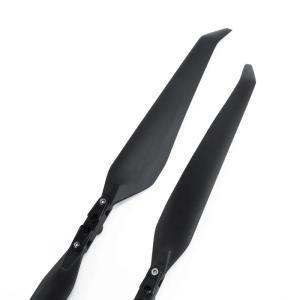
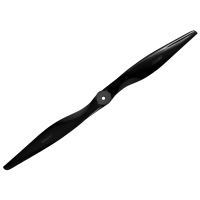
This collection includes BLHeli-32 ESCs, AMPX ESCs, BLDC ESCs, square-wave ESCs, FOC ESCs, 4-in-1 ESCs, EastWind ESCs and high-voltage SineSic FOC ESC options across multiple voltage and communication requirements, including 2-6S, 5-14S, 5-18S, 12-24S, 24S, 400V-600V and 800V systems. For best results, select ESCs together with compatible drone motors, propellers and drone batteries.
Shop Drone ESCs by Application and Control Type
FPV Drone ESCs
Compact ESC options for FPV racing, freestyle, cinematic drones and high-response multirotor builds.
Commercial & Industrial UAV ESCs
Electronic speed controllers for commercial drones, industrial UAVs, inspection aircraft, mapping platforms and professional multirotor systems.
BLDC / Square-Wave ESCs
Brushless DC motor controllers for UAV propulsion systems, available across multiple battery voltage ranges for different aircraft sizes.
FOC ESCs
Field-oriented control ESC options for smoother, efficient motor control in advanced UAV, industrial and heavy-lift power systems.
Manned & Delivery Aircraft ESCs
ESC options for larger aircraft projects, delivery drones, heavy payload platforms and high-power propulsion applications.
High-Voltage SineSic FOC ESCs
High-voltage ESC options for demanding aircraft power systems, including 400V-600V and 800V FOC ESC applications.
How to Choose a Drone ESC
Choosing the right drone ESC depends on the motor, battery voltage, current requirement, propeller size, aircraft weight, payload, flight controller, protocol requirements and flight style. Smaller FPV drones usually need compact, fast-response ESCs, while commercial, industrial and heavy-lift UAVs often require higher-voltage ESCs with greater current capacity, stronger thermal performance and more advanced communication options.
ESC compatibility should always be checked as part of the complete drone power system. Motor KV, battery cell count, propeller load, firmware, signal type, telemetry needs, cooling and available installation space can all affect ESC performance and reliability.
BLDC, FOC and High-Voltage ESC Options
MAD ESC products include BLDC / square-wave ESCs for commercial and industrial UAVs, FOC ESCs for advanced motor control, AMPX ESCs for a range of UAV voltage classes, and high-voltage SineSic FOC ESC options for larger aircraft power systems. Available voltage classes include compact drone ESC ranges as well as higher-voltage options for larger motors, heavier payloads and demanding flight applications.
Choosing between BLDC, FOC and high-voltage ESC options depends on the aircraft type, motor, battery voltage, current demand, propeller load, control requirements and operating environment. For commercial, industrial, manned and delivery aircraft projects, ESC selection should be reviewed as part of the full propulsion system rather than as a standalone component.
ESC Protocols, Telemetry and Flight Controller Compatibility
MAD ESC options support different control and communication requirements depending on the product series and application. Some ESCs are designed for high-speed multirotor control, while others are intended for commercial, industrial, heavy-lift or advanced UAV systems where telemetry, communication stability and flight controller compatibility are important.
Available ESC features may include BLHeli-32 support, bidirectional DShot, RPM signal output, DroneCAN, CyphalCAN, CAN telemetry and RS485 hardware communication options. Protocol support varies by ESC model, so builders should confirm the required flight controller protocol, voltage range, current rating and telemetry needs before selecting an ESC.
For ArduPilot-based aircraft, MAD square-wave ESCs may be available in DroneCAN and CyphalCAN versions. The DroneCAN version is the appropriate choice when compatibility with ArduPilot is required.
Drone ESC FAQ
What is a drone ESC?
A drone ESC, or electronic speed controller, controls how power is delivered from the battery to the motor. It allows the flight controller to adjust motor speed and helps determine throttle response, efficiency and flight stability.
What types of drone ESCs does MAD Components offer?
MAD Components offers ESC options for FPV drones, multirotor UAVs, BLHeli-32 systems, AMPX ESC applications, BLDC motors, FOC control, high-voltage systems, commercial drones, industrial drones, heavy-lift UAVs, manned aircraft projects and delivery aircraft applications.
How do I know which ESC is compatible with my drone motor?
Check the motor voltage range, expected current draw, battery cell count, propeller load, firmware requirements, signal type, telemetry needs and flight controller compatibility. For larger UAV systems, the ESC should be selected together with the motor, propeller and battery.
What is the difference between a BLDC ESC and a FOC ESC?
A BLDC ESC controls a brushless DC motor and is commonly used in drone and UAV propulsion systems. A FOC ESC uses field-oriented control for smoother and more efficient motor control, which can be useful in advanced UAV, industrial, heavy-lift and high-voltage aircraft applications.
Are high-voltage ESCs better for heavy-lift drones?
High-voltage ESCs can be useful for larger UAVs because they support higher-voltage power systems and can help manage power delivery for demanding motors and propellers. The correct ESC still depends on the full aircraft design, motor choice, propeller load and propulsion requirements.
Do MAD BLHeli-32 ESCs support bidirectional DShot?
Yes. MAD BLHeli-32 ESCs can support bidirectional DShot when the feature is enabled in the ESC and flight controller setup. Bidirectional DShot is commonly used for RPM telemetry and advanced multirotor tuning.
Do AMPX ESCs need throttle calibration?
Yes. AMPX ESCs should have the throttle range calibrated when first used with a new transmitter or control setup. This applies to models such as AMPX 40A, 60A, 80A, 120A and 200A ESCs across supported voltage ranges.
Are MAD square-wave ESCs compatible with ArduPilot?
MAD square-wave ESCs may be available with DroneCAN or CyphalCAN protocol options. For ArduPilot compatibility, choose the DroneCAN version supported by your flight controller.
What is the difference between DShot telemetry and CAN telemetry?
DShot telemetry is commonly used for fast, real-time ESC communication in multirotor drones. CAN telemetry is better suited to multi-node systems and more complex environments where reliability and interference resistance are important.
Why do some 4-in-1 ESCs need a capacitor?
A capacitor helps suppress voltage spikes and braking noise produced by the motors and ESC during rapid throttle changes or braking. This can help protect the ESC and improve power-system stability.
Can MAD ESCs output RPM signals?
Some MAD ESCs provide RPM signal output. RPM signal behavior depends on the ESC and motor setup, and builders should confirm compatibility with their flight controller and required telemetry method.
Should I choose the ESC separately or as part of a power system?
For best results, choose the ESC as part of a complete drone propulsion system. Motor, ESC, propeller and battery compatibility all affect thrust, efficiency, heat, reliability and flight performance.


